Table of Contents
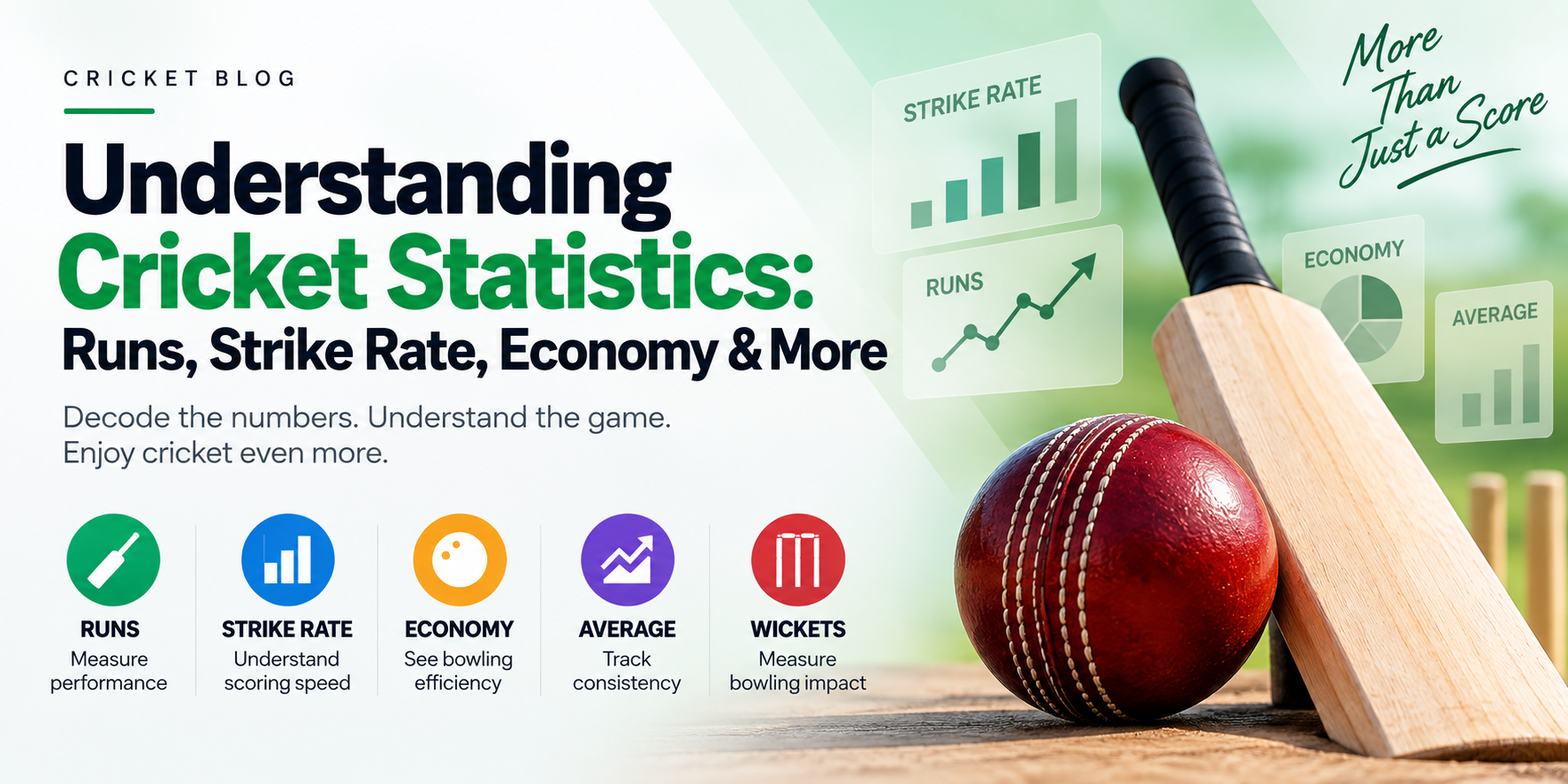
Cricket is a game of moments, but statistics explain the bigger picture. Whether you are following international cricket, T20 leagues, or individual cricket players, understanding basic numbers can make matches much more interesting. From runs and strike rate to bowling economy, these figures help fans understand how effectively a player is performing.
Cricket fans using platforms such as Cricbet99 to follow matches and cricket-related information may find these statistics useful for understanding player performances and match situations.
Runs: The Foundation of Batting Statistics
Runs are the most straightforward batting statistic. They represent the number of runs a batter scores during an innings. A player's total runs can indicate consistency, but the number becomes more meaningful when considered alongside matches played, innings, and average.
For example, scoring 500 runs across a tournament demonstrates productivity, but knowing how many innings were required provides additional context. This is why cricket statistics should generally be viewed together rather than individually.
Batting Average: Measuring Consistency
Batting average is another important statistic used to evaluate cricket players. It is calculated by dividing the total runs scored by the number of times a batter has been dismissed.
A high average generally indicates that a batter consistently contributes substantial scores before getting out. However, the importance of an average depends on the format. Test cricket, ODIs, and T20 cricket have different demands, so comparing averages across formats without context can be misleading.
Strike Rate: Understanding Scoring Speed
Strike rate is particularly important in limited-overs cricket. It measures how quickly a batter scores runs and is usually calculated as:
Strike Rate = (Runs ÷ Balls Faced) × 100
A batter scoring 60 runs from 40 balls has a strike rate of 150. That means the player scored 150 runs for every 100 balls faced at that scoring rate.
In T20 cricket, where teams have only 120 deliveries in an innings, strike rate can be especially significant. A batter who scores quickly can change the momentum of a match even without making a century.
Economy Rate: A Bowler's Key Number
For bowlers, economy rate measures how many runs they concede per over.
Economy Rate = Runs Conceded ÷ Overs Bowled
A lower economy rate generally means the bowler has restricted scoring effectively. In T20 cricket, maintaining a low economy can be particularly valuable because every additional run can influence the final result.
However, economy should not be viewed alone. A bowler's wickets, bowling average, strike rate, and the phase in which they bowl can provide a more complete picture.
Bowling Strike Rate and Wickets
Bowling strike rate measures how many deliveries a bowler takes, on average, to dismiss a batter. A lower bowling strike rate generally indicates that the bowler takes wickets more frequently.
Wickets themselves remain one of the most important measures of bowling impact. But context matters: taking wickets during the powerplay or at the death can have a different influence than taking wickets when the opposition is already struggling.
Why Statistics Matter to Modern Cricket Fans
Today's cricket audience has access to more information than ever. Live scorecards, player comparisons, ball-by-ball data, and performance trends allow fans to understand the game beyond traditional scoreboards.
Platforms such as Cricbet99 can be easier to follow when fans understand what these numbers actually represent. Instead of simply seeing a player's score or a team's total, viewers can assess scoring speed, consistency, bowling efficiency, and match situations.
Final Checklist for Reading Cricket Statistics
When analysing a player's performance, consider:
- Runs: How many runs were scored?
- Batting average: How consistently does the batter contribute?
- Strike rate: How quickly are runs being scored?
- Wickets: How effective is the bowler at taking dismissals?
- Economy rate: How effectively does the bowler restrict runs?
- Bowling strike rate: How frequently does the bowler take wickets?
- Match context: Was the performance delivered under pressure?
Understanding these statistics turns a simple scorecard into a deeper story about performance. For cricket fans exploring cricket players, these numbers provide a practical way to understand who is consistent, who scores quickly, and who can change the course of a match.